

Chimney Cap Installation
Stainless steel caps for brick chimneys and stainless chase tops for chimneys wrapped in siding.
Grand Rapids Elite Chimney Sweep handles chimney liner installation in Grand Rapids, MI, from sealing cracked clay flue tile to running a new stainless steel liner the full height of the chimney.
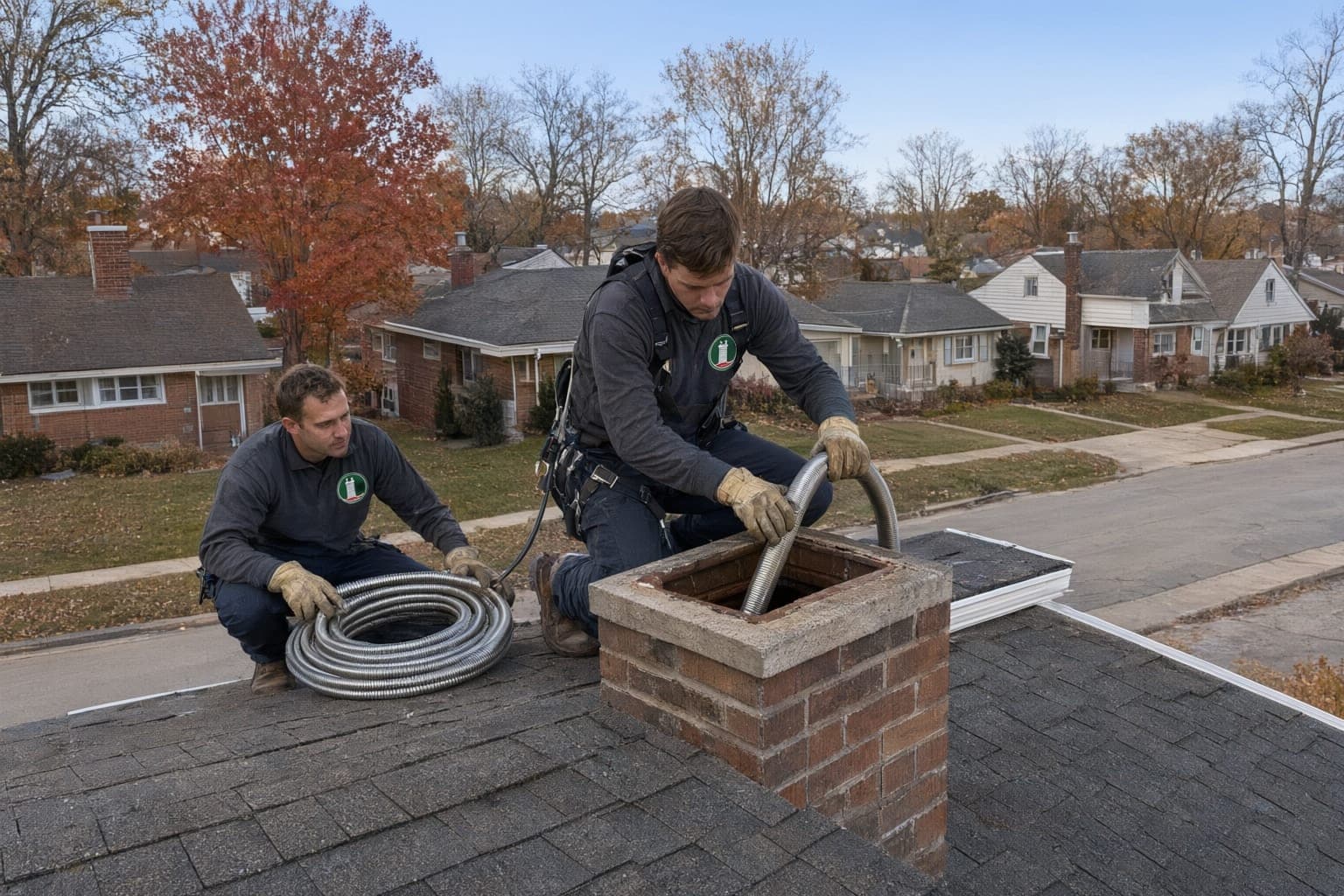
Most older Grand Rapids chimneys have a clay flue liner, a stack of 2 foot clay tiles inside the brick. After a few decades of winters the tiles crack, and the gaps let heat reach the wood framing. A camera scan shows us which way to go. We feed our liners down in one piece, usually 25 to 35 feet of pipe on a two-story house.
If the tile is cracked but still in place, a sealant process called HeatShield coats the inside and closes the cracks, with no tearing out. If the tile can't be saved, we run an insulated 316Ti stainless steel liner down the whole flue and pull the permit Michigan requires. Think of a liner as the dryer duct for your fireplace: if it's cracked, the heat goes where it shouldn't. Our liner installs take 1 day, and we pull the permit before we start.
Call (616) 317-7774 to talk about a chimney liner.
Questions?Contact UsTwo methods cover almost every liner job. Which one fits depends on what the camera shows.
A sealant is pumped through the flue to coat the clay tile and fill cracks, missing mortar between tiles and small voids. The old tile stays in the wall. Our installers are factory trained in the process.
316Ti is the stainless steel grade made for wood-burning flues, and ours is insulated and UL listed. It runs the whole height of the chimney in one piece, from the cap down to the firebox.
Newer furnaces and water heaters often vent badly into a big old chimney. We install a mechanical liner sized for the appliance so the exhaust has a proper path.
Switching from wood to gas, or the other way, changes what the flue has to handle. NFPA 211 calls for a Level 2 inspection first, so the camera scan decides the liner.
Michigan requires a permit for a liner. We pull it for you, and the liner goes in to the maker's instructions and the NFPA 211 fire-code standard.
Pieces of clay in the ash, a fireplace that smokes into the room, a fire that burned inside the flue, or a camera scan with cracks. Any one of them is worth a scan.
Typical Grand Rapids ranges for 2026, not a quote. The permit is filed by us.
A flashlight shows the first few feet of a flue. A typical two-story chimney runs about 25 feet. The signs you can spot from the living room are these:
None of those proves a cracked liner. They are reasons to scan, and the scan is what tells you.
| Method | Best for | Typical price |
|---|---|---|
| HeatShield sealant | Cracked clay tile that is still in place | $2,500 to $4,500 |
| Stainless 316Ti liner | Broken tile, a flue fire, a change of fuel | $2,200 to $5,000 |
| Mechanical liner | Furnace or water heater venting | $600 to $1,500 |
HeatShield costs a little more in some chimneys because it takes more time per foot, and it keeps the original clay. A stainless liner costs less on a short, straight flue. We'd pick whichever the scan supports, and we'll show you the pictures.
Most jobs take one to two days from setup to cleanup. The roof access is the slow part. A taller chimney or a flue that jogs sideways takes longer.
A liner changes the fire safety of the house, so the state wants a permit. We pull it. A liner with no permit behind it can cause trouble at resale, and that's a headache worth skipping.
On a job last spring in a 1960s ranch in Wyoming, the scan showed a clean-looking flue with a one inch gap between two tiles. From the firebox you'd never see it. That gap lined up with the attic framing, which is exactly where you don't want a gap.
If the brick is sound, a liner solves the problem. If the chimney leans or the bricks are loose, look at a chimney rebuild. Not sure which you have? A chimney inspection with the camera answers it. We'd pick a liner over a rebuild any day the brick is good.
A digital report of the camera scan with photos, and repair quotes you can read at the kitchen table. Nothing gets booked until you say so.
Often yes, when the tile is still in place. The sealant coats the cracks from the inside. If tiles are missing or have shifted, a stainless liner is the better answer.
The appliance sets the size, not the chimney. The fireplace, stove or furnace decides how much flue area it needs, and we measure it at the scan.
Often it does. Gas exhaust is cooler and wetter than wood smoke, and it eats old clay tile from the inside. Many gas appliances call for a stainless liner sized for them.
Sometimes. A cracked or oversized flue is one common cause, and a short chimney or a closed damper are others. The scan tells us which one you have.
A stainless steel chimney liner in Grand Rapids typically costs $2,200 to $5,000, depending on height and whether the flue jogs sideways. HeatShield repair of a cracked clay liner runs about $2,500 to $4,500. A mechanical liner for a furnace or water heater is usually $600 to $1,500.
Yes. Michigan requires a permit to install a liner, and we pull it as part of the job. The liner has to go in to the manufacturer's instructions and the NFPA 211 standard, which is the fire-code rulebook for chimneys. A job without a permit can cause problems when you sell.
A stainless steel liner is built to outlast the clay it replaces, and a clean flue helps it get there. Soot 1/8 inch thick, about a dime, is the point where sweeping is overdue, and heavy soot can burn hot enough to damage a good liner. Sweep once a year and a liner can serve for decades.
On the camera scan it looks like dark lines or gaps between the 2 foot clay tiles, or tiles that have shifted. At home, look for flakes of clay in the ash or a fireplace that smokes into the room. Any one of those is reason enough to book a Level 2 scan.
Often yes. If the tile is cracked but still in place, HeatShield coats the inside and seals the cracks, so the old tile stays. If tiles are missing or shifted, repair won't hold, and a stainless steel liner is the right choice. The camera scan decides, with pictures for you.
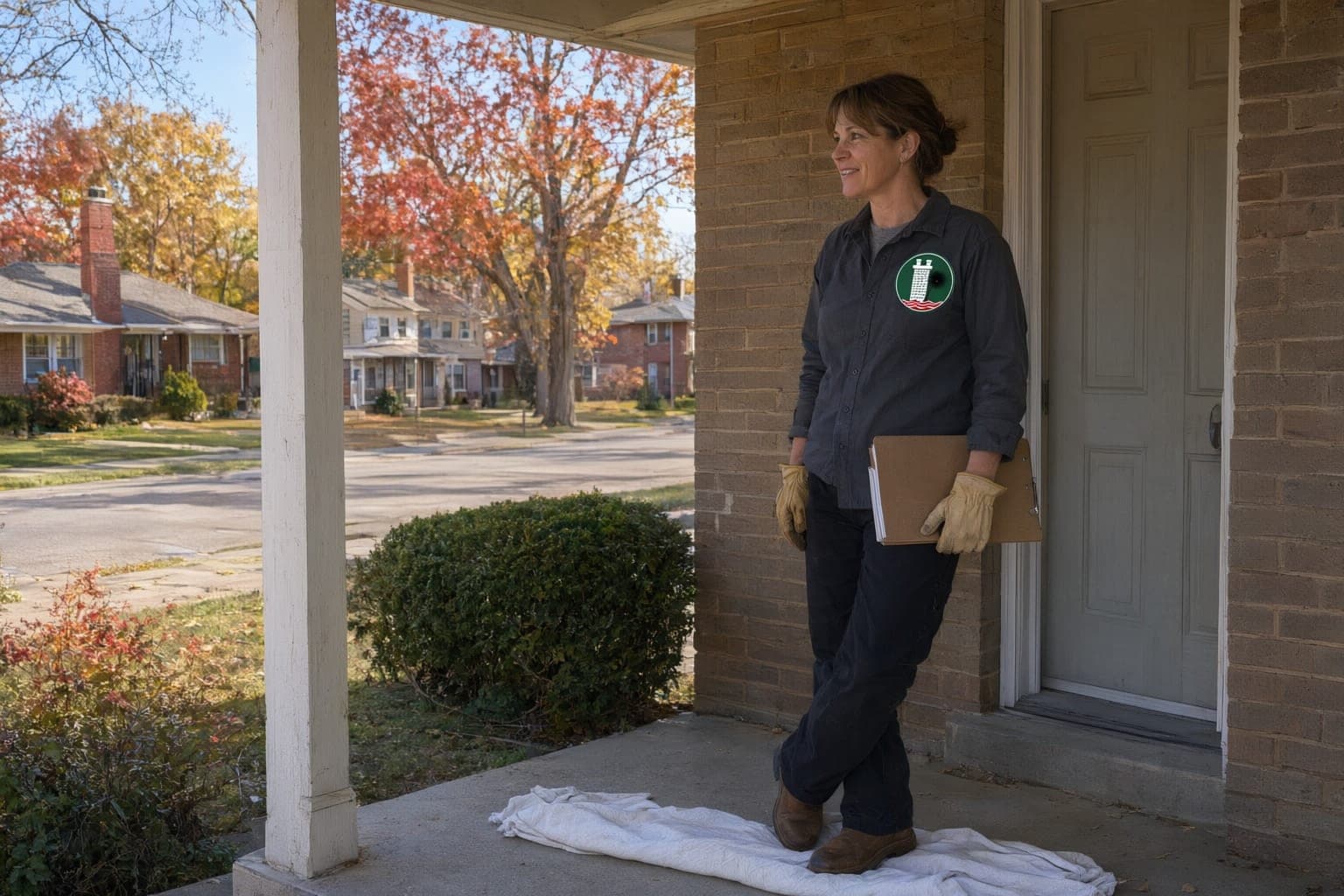
Most liner jobs take one to two days from setup to cleanup. A single story chimney with a straight flue can go faster, while a tall chimney or one that jogs sideways takes longer. We lay tarps and runners first so the floor and furniture stay clean, and the permit is filed with the job.
Learn more about how we work.
Stainless steel caps for brick chimneys and stainless chase tops for chimneys wrapped in siding.
Hairline cracks sealed and coated, or a broken-up crown rebuilt with a sloped slab that sheds water.
Level 1, 2 and 3 inspections with a camera scan of the whole flue and a photo report emailed to you.
Flashing, crown, brick or cap: we trace the water first, then fix the part that is letting it in.
Partial and full rebuilds that take down only the brick that has failed and lay it back up straight.
Crumbling mortar joints ground out and repacked, loose bricks replaced, the top of the stack made tight again.
Leave your name, number and a line about the chimney. We call you back during office hours to set a time.